
By Brad Dohack, Gulf Pointe | eXp Realty, Estero, FL. In real estate since 2006. Updated October 2026.
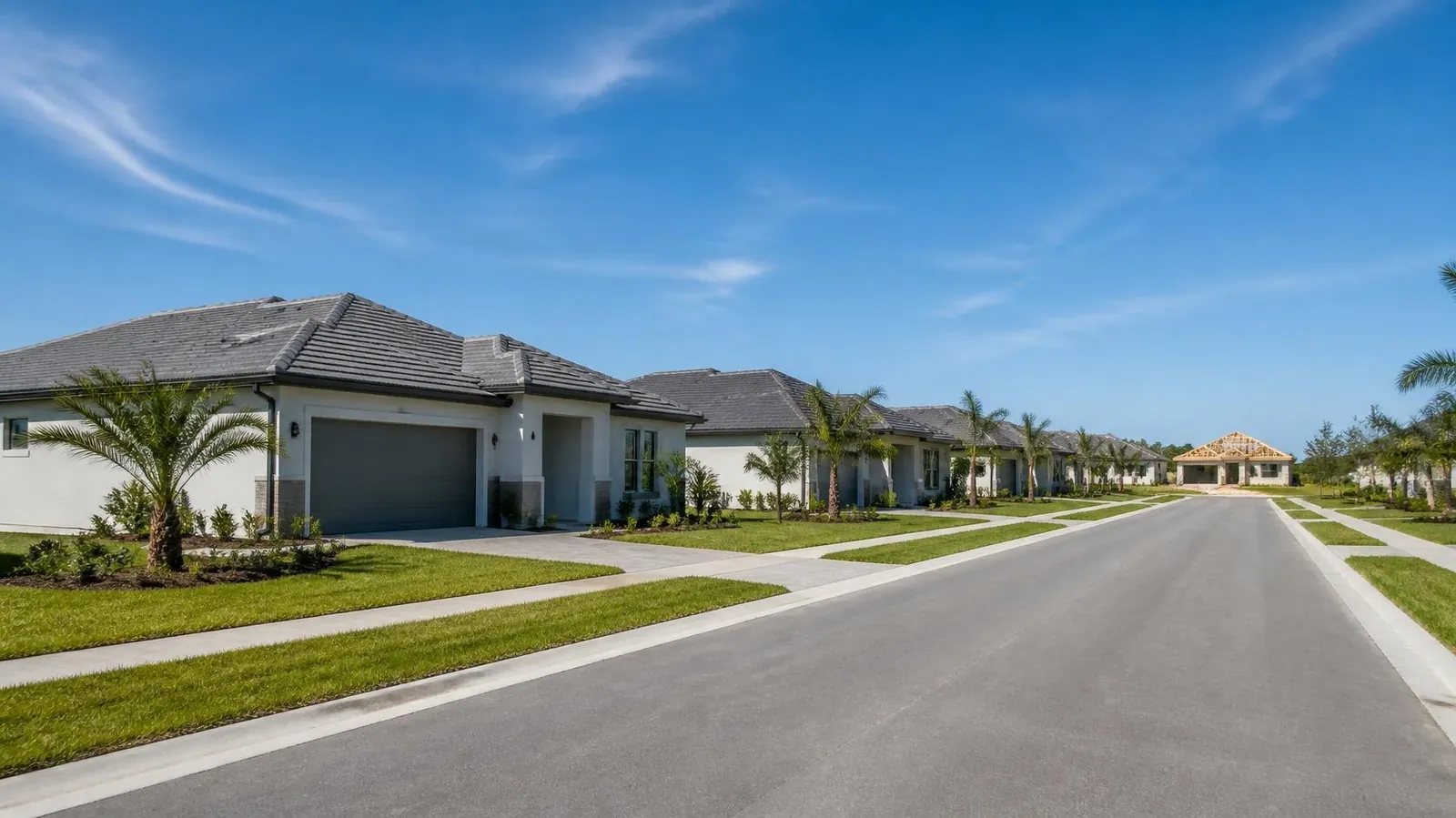
Drive through Estero, Fort Myers, Cape Coral, or the newer parts of Naples and you'll see it: model homes, flags, and buyers walking lots. A lot of the people I work with are choosing a new build over resale right now, and it isn't just for the new-house smell.
In this market, a new home can take care of two of the biggest headaches buyers have (insurance and financing) and remove a lot of guesswork. It also comes with fine print that builders don't put on the billboard. Here's both sides.
Where new construction wins
Insurance tends to be easier
If you read my post on Florida insurance rates easing, you know this is the big one. Homes built to the current Florida Building Code usually come with features insurers like: stronger roof-to-wall connections, a sealed roof deck, and impact-rated windows or shutters. Florida law requires insurers to offer discounts for windstorm mitigation features like these (section 627.0629, Florida Statutes), so a new build often starts with credits an older home would have to earn through upgrades.
Some carriers go further. Security First, for example, announced discounts of up to 20% on certain new policies for homes built in 2024 and 2025. Your own quote will depend on the home, the location, and the flood zone, so get one before you commit.
A new roof and no deferred maintenance
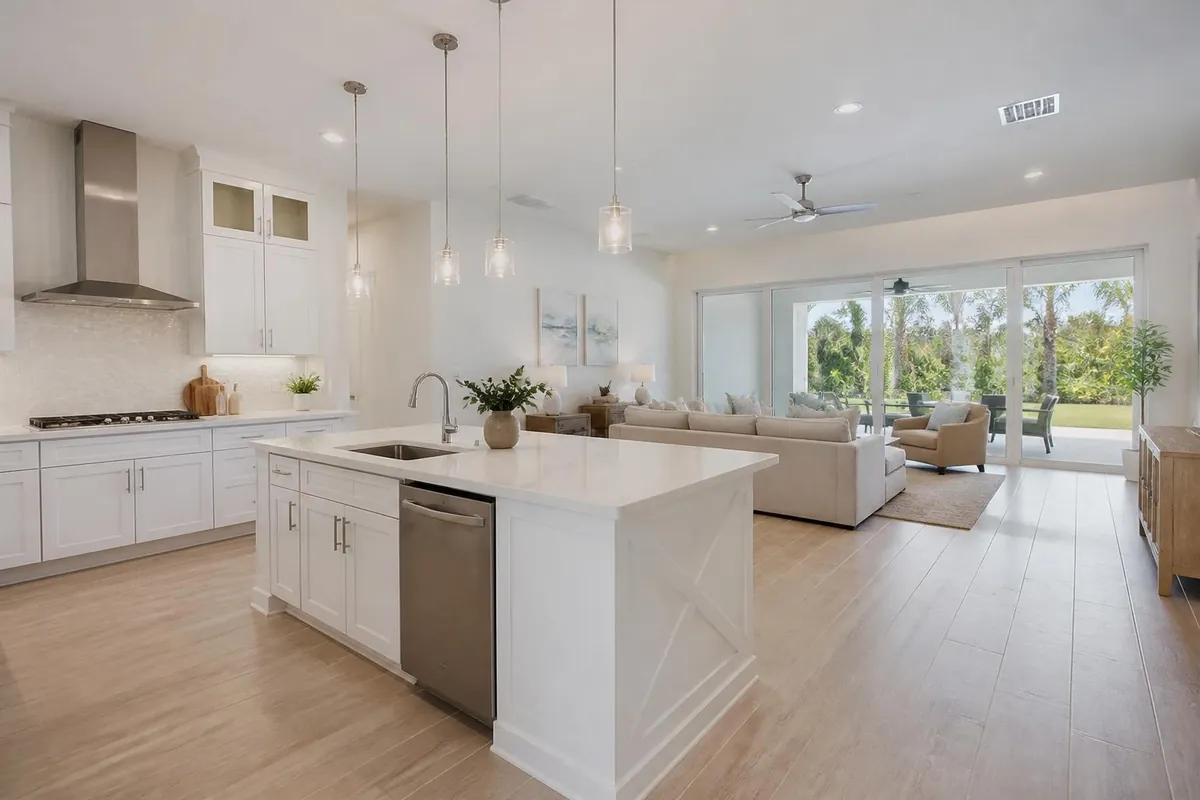
Roof age is one of the first things an insurer asks about on an older Florida home. A new build sidesteps that: new roof, new systems, a builder warranty, and better energy efficiency. If something does go wrong in the first year, you have a warranty to lean on instead of a repair bill.
Builder financing incentives
Many builders use their in-house or preferred lenders to buy down the mortgage rate, and some of those buydowns are structured to last the life of the loan rather than just the first year or two. When it works, the monthly payment difference compared with a resale at market rates can be significant. Ask exactly how the buydown is structured, how long it lasts, and what it costs you in exchange.
The fine print
No new home is perfect. Here's what to go in clear-eyed about.
Expect a punch list. Settling, cosmetic issues, and the occasional system callback are normal. Do a thorough walkthrough and hire your own independent inspector, even on a brand-new home.
Timelines move. Build and delivery dates slip. If you're on a lease or selling another home, build in a cushion. The builder you pick makes a big difference here. If timing is tight, look at inventory homes that are already finished or close to it.
Some closing costs shift to you. Builders use their own contracts, and they often have the buyer pay costs a resale seller customarily covers. The big one is the documentary stamp tax on the deed, which in Florida is 70 cents per $100 of the price (section 201.02, Florida Statutes). Sometimes the owner's title policy shifts too. Add builder document fees, utility or impact fees, HOA capital contributions, and in many newer Lee and Collier communities, CDD assessments on your tax bill.
Know if there's a CDD. A Community Development District funds roads, water, and amenities in many master-planned communities, and its assessments show up on your property tax bill. Florida law requires builders to disclose a CDD in the initial sales contract (section 190.048, Florida Statutes). Read that disclosure carefully and ask what the annual assessment is and how long the debt portion runs.
Incentives come with strings. The best rate buydowns and closing credits usually require the builder's preferred lender and title company. That isn't automatically a bad deal, but compare the full package (rate, credits, and fees) against outside financing, not just the headline rate.
Bring your own agent. The sales team in the model home works for the builder. Having your own buyer's agent from the first visit means someone on your side is reading the contract and pushing on incentives. Some builders only work with an agent who was registered at your first visit, so ask before you tour.
Read the builder's contract closely. Most Florida resale deals use a standard Florida Realtors and Florida Bar form with a set inspection period. A builder's contract is written by the builder's attorneys. Look closely at the deposit terms, when your deposit stops being refundable, what happens if construction is delayed, and whether the builder can substitute materials or change specifications. Have it reviewed before you sign.
Less give on base price. Builders protect the comps for the whole community, so they'd rather add incentives than cut the sticker price. Negotiation looks different than on a resale.
New construction vs resale at a glance
| Factor | New construction | Resale |
|---|---|---|
| Homeowners insurance | Often lower; current code and wind mitigation credits | Often higher; an older roof can raise premiums or limit carriers |
| Roof and major systems | Brand new | Age varies; an old roof can affect insurability |
| Mortgage rate | Builder buydowns are common (ask how long they last) | Market rate, unless the seller pays for a buydown |
| Repairs and upkeep | Minimal early on; builder warranty | Possible deferred maintenance |
| Closing costs | Buyer may pay deed doc stamps and title; CDD and HOA fees common | Seller customarily pays deed doc stamps |
| Price vs incentives | Base price protected; negotiate incentives | More room on price itself |
| Move-in timing | Wait for the build, or buy an inventory home | Usually a faster close |
| Location | Newer communities tend to be farther inland | Established neighborhoods near the beaches, and most Gulf-access canal homes |
| Contract | The builder's own contract | Standard Florida form with an inspection period |
If you go resale, check these first
Resale still wins on location. Established neighborhoods close to the beaches and most Gulf-access canal homes are resale only, and you can usually move in sooner. Just do your homework on an older home, especially since Hurricane Ian in 2022:
- Permit history. Ask for the permits on any roof or storm repairs, and check with the city or county building department for open or expired permits before you make an offer. An open permit can hold up a closing.
- Roof work. Find out whether a storm-damaged roof was repaired or fully replaced, and ask for the insurance claim history along with the permit record. Roof age drives your insurance quote.
- Water intrusion. Ian's storm surge reached places that had not flooded before. Fresh drywall, new paint, or new flooring in a recently updated home is worth asking about, and your inspector can check for moisture.
- Flood zone. Look up the address on FEMA's Flood Map Service Center and get a flood insurance quote before you commit, not after.
- Seawall and dock. On a canal home, have a qualified marine contractor look at the seawall and dock. Repairs are a major expense.
Why the math often works anyway
Here's the key point: in a market where builders are competing for buyers, the incentives on the table (rate buydowns, closing-cost help, design-center credits) can more than cover the extra costs a builder contract shifts to you. Treat the builder's contract as a starting point, not a final answer. There's often room on incentives, upgrades, lot premiums, and closing help, especially on finished inventory homes a builder wants to move.
The comparison that matters is total cost of ownership: price, rate, insurance, taxes, HOA and CDD fees, closing costs, and maintenance. Run that side by side with a comparable resale before you decide.
Where to look in Southwest Florida
New construction is spread across Lee and Collier, from Lehigh Acres and Cape Coral to Estero and the eastern edges of Naples. Here's where I'd start:
- Browse new construction in Southwest Florida
- Lehigh Acres: search Lehigh Acres listings | 4004 13th St SW, a 2019 build in Lehigh Acres
- Cape Coral: search Cape Coral listings | Cape Coral real estate agent | building your own? see this residential homesite in Northwest Cape Coral
- Alva: 2021-built home in Hampton Lakes at River Hall
- Estero: search Estero listings | Estero real estate agent
- Fort Myers: search Fort Myers listings | Fort Myers real estate agent
- Naples: search Naples listings | Naples real estate agent
First home? My first-time home buyer guide for Southwest Florida covers the basics.
The bottom line
New construction isn't automatically the right answer. But for a lot of buyers in this market, it pencils out better than they expect once you add up the insurance, the buydown, and the incentives. The trick is knowing what you're signing, what's negotiable, and how the full package stacks up against a resale.
Before you sign a builder's contract, email me at info@liveswfl.com or call 239-494-5156. I'll go through the incentives with you and compare the full package against a resale. You can also reach me through my contact page.
Get the weekly update. Subscribe to my free Southwest Florida newsletter.
Brad Dohack, Team Leader, Gulf Pointe | eXp Realty
Note: This is general information, not legal, tax, financial, or insurance advice. Incentives, fees, codes, and insurance credits vary by builder, community, and property. Confirm the details of any contract or quote with the right professionals before you decide.
Sources
- Section 201.02, Florida Statutes (documentary stamp tax on deeds, 70 cents per $100)
- Section 627.0629, Florida Statutes (windstorm mitigation discounts in rate filings)
- Section 190.048, Florida Statutes (CDD disclosure in initial sales contracts)
- FEMA Flood Map Service Center (look up the flood zone for an address)
- Security First, discounts up to 20% for homes built 2024 and 2025